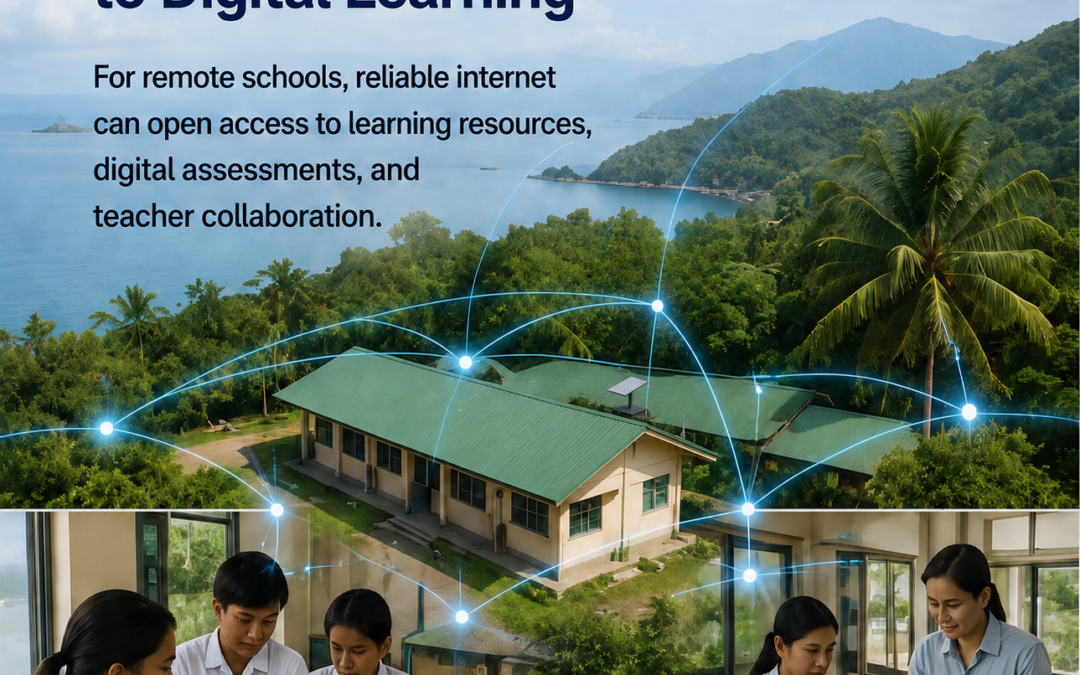
Across the Philippines, thousands of learners continue to face a challenge that many urban schools no longer worry about: reliable access to the internet. For schools located in geographically isolated and disadvantaged areas, or GIDAs, connectivity is not just a technology concern. It is a learning issue, an equity issue, and a national development issue.
Recent initiatives led by the government and private sector show a growing commitment to bring digital learning tools to underserved communities. Through programs involving the Department of Information and Communications Technology, the Department of Education, and private sector partners, remote schools have received tablets, Starlink satellite internet access, and teacher digital upskilling support. These efforts reflect an important shift: digital education can no longer be limited to schools with easy access to fiber lines, urban infrastructure, or commercial connectivity.
But bringing internet to remote schools is not as simple as delivering equipment.
For digital learning to truly work in GIDAs, installation is only the beginning.
Connectivity Must Be Reliable, Not Just Available
A school may receive an internet kit, but the real question is: will it work when teachers and students need it most?
Reliable connectivity requires proper site assessment, correct equipment placement, stable power conditions, secure mounting, optimized network configuration, and careful testing. In remote schools, even small issues can affect performance: blocked satellite line of sight, poor router placement, weak Wi-Fi coverage, unstable power, lack of surge protection, or absence of local technical support.
When these are not addressed, the result is predictable. The connection may be present, but not dependable.
For teachers, unreliable connectivity can disrupt lesson delivery. For students, it can limit access to online content, digital assessments, learning platforms, and communication tools. For school administrators, it can affect reporting, coordination, and data submission.
This is why digital learning in GIDAs requires more than a one-time deployment. It requires an end-to-end connectivity approach.
What “Beyond Installation” Means
Beyond installation means treating every school site as a working learning environment, not just a delivery point.
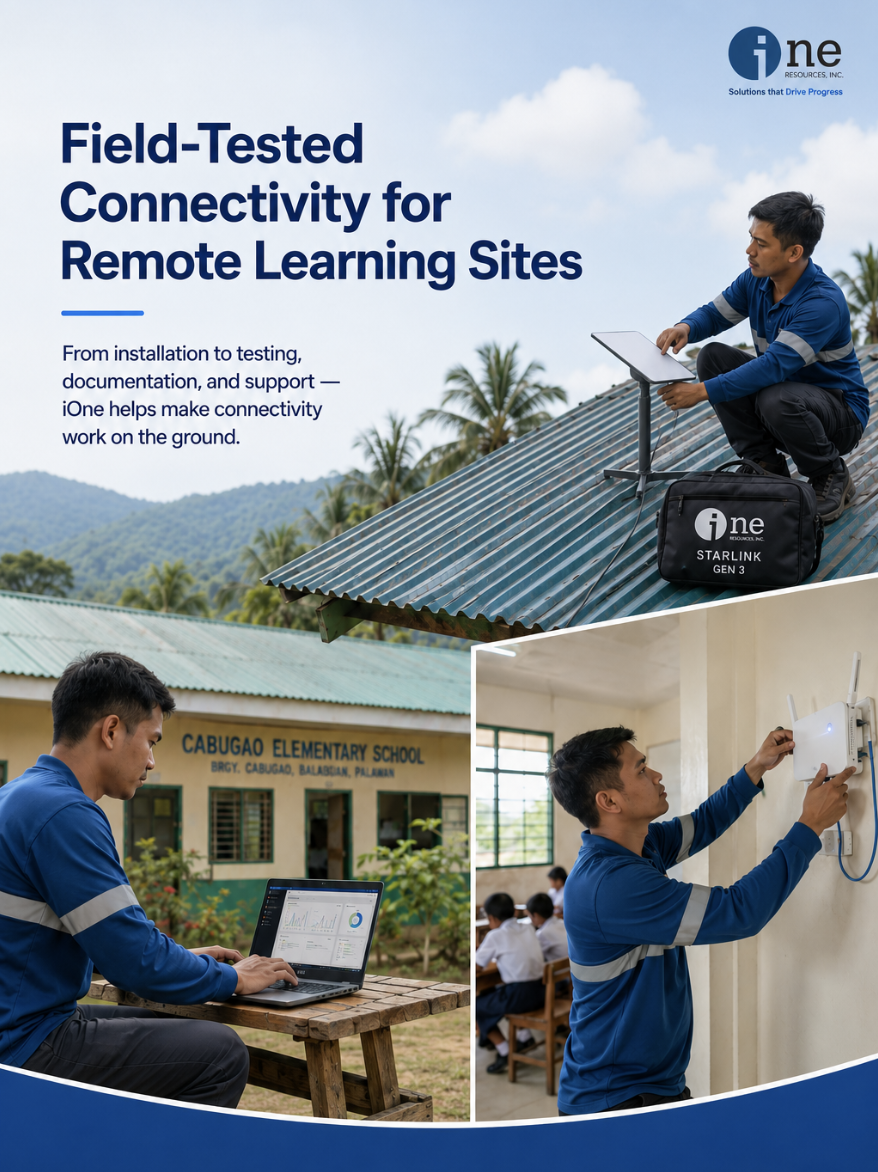
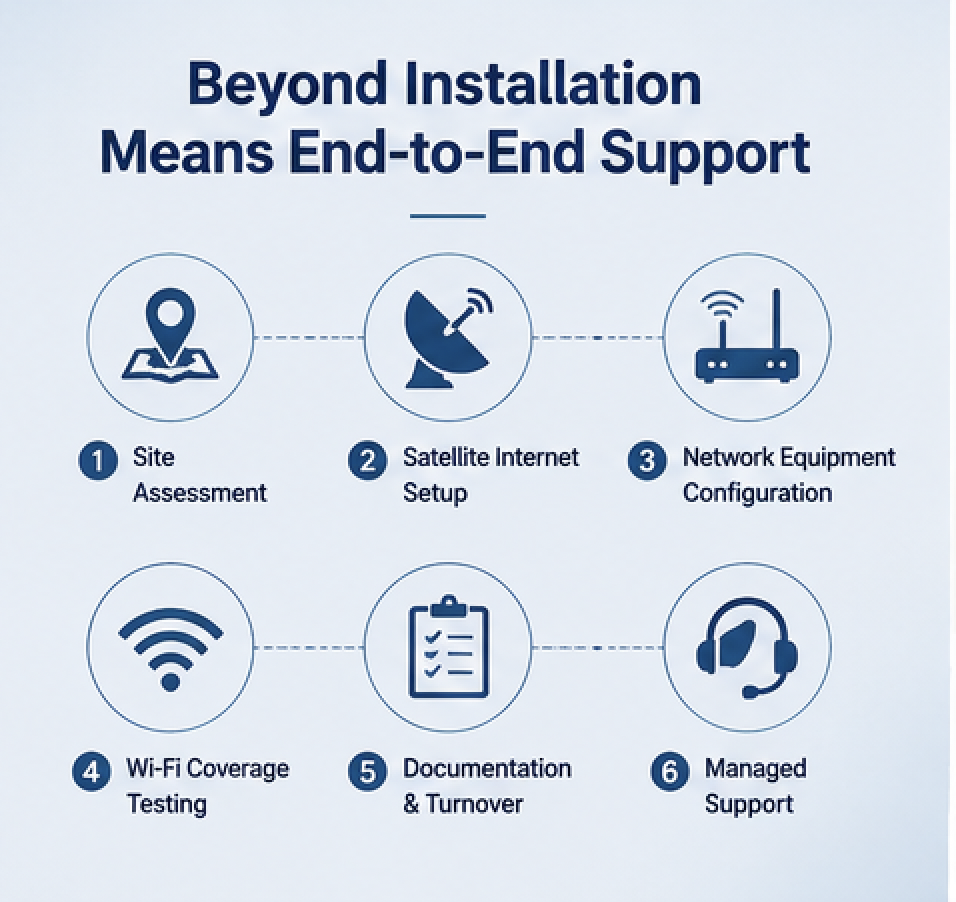
A complete deployment should include site inspection, equipment installation, network setup, user testing, documentation, training, turnover, and support. Each step matters because remote schools often do not have immediate access to technical teams once the deployment team leaves.
For satellite internet and school connectivity projects, proper implementation should cover:
-
- Site readiness assessment
- Satellite dish positioning and secure installation
- Router, switch, and access point setup
- Wi-Fi coverage testing
- Speed and stability testing
- Power and cabling review
- User orientation for teachers or ICT coordinators
- Documentation and turnover reports
- Support process after deployment
This approach helps ensure that the school does not only receive connectivity, but is actually able to use it for teaching, learning, and daily operations.
Why GIDA Schools Need a Different Deployment Mindset
GIDA schools operate under different realities.
Some are located in islands, mountain barangays, far-flung communities, or areas with limited transport access. Some have limited electrical infrastructure. Others may experience harsh weather, long travel times, or difficulty securing replacement parts. These conditions make deployment planning more critical.
In urban areas, technical issues can often be resolved quickly. In remote sites, a small installation mistake can become a long-term service problem.
That is why connectivity projects for GIDAs must be designed for resilience. The goal is not only to connect the school today, but to keep it connected tomorrow, next month, and throughout the school year.
Digital Learning Depends on the Network Behind It
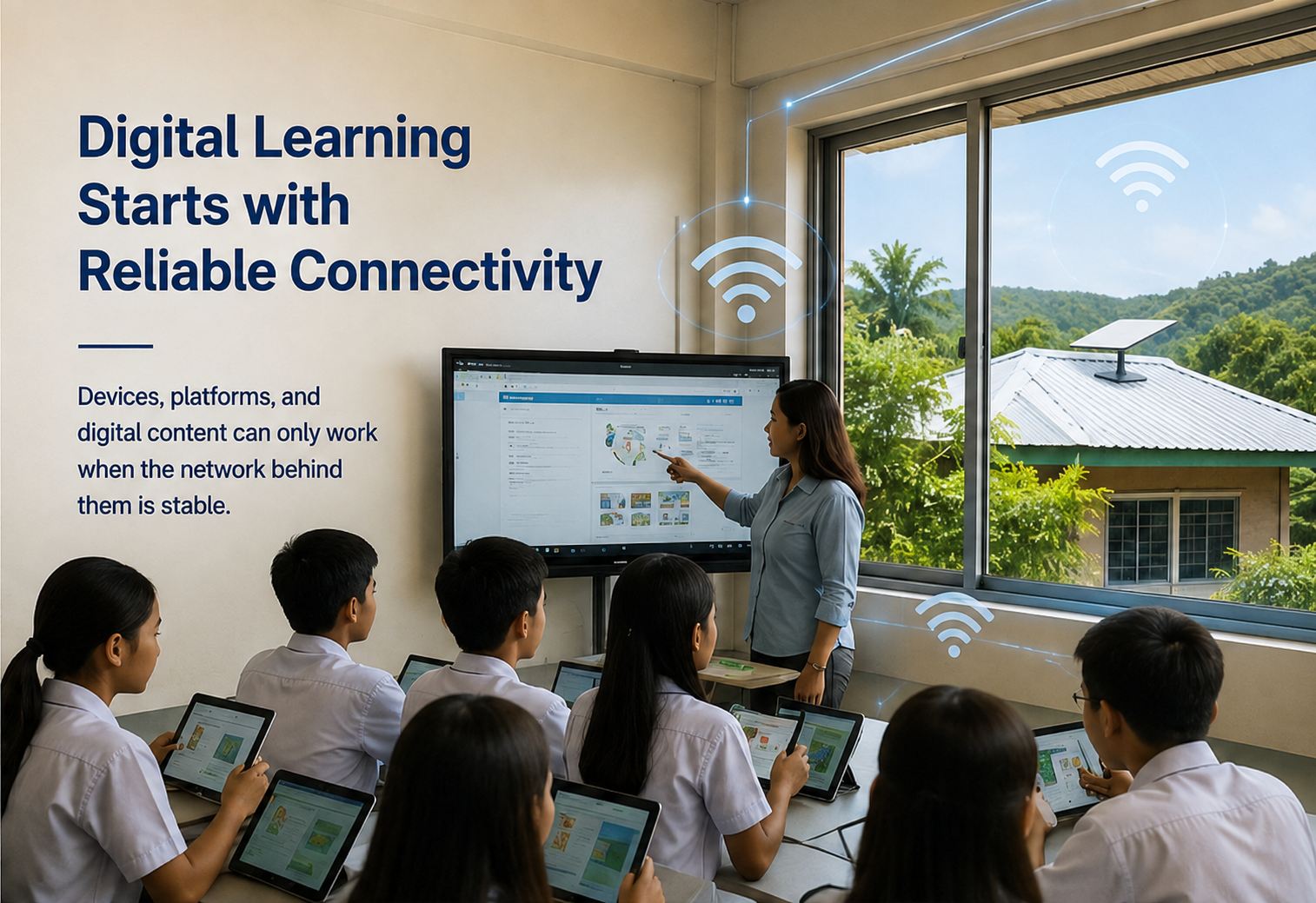
Digital transformation in education is often associated with devices, platforms, content, and learning applications. These are all important. But none of them can function properly without reliable connectivity.
A tablet cannot maximize its value without access to learning resources. A digital curriculum platform cannot help teachers if the school network is unstable. Online assessments cannot generate timely insights if the connection fails during use. Teacher upskilling becomes more meaningful when educators have the infrastructure to apply what they learned.
Connectivity is the foundation that allows digital learning tools to work.
For GIDA schools, this foundation must be strong, practical, and field-tested.

The Role of iOne Resources
iOne Resources supports mission-critical ICT deployments across the Philippines, including connectivity, network infrastructure, field operations, cybersecurity, systems integration, and managed technology services.
For education and government projects, iOne’s role goes beyond equipment installation. The company brings field deployment experience, technical documentation discipline, network setup capability, and operational support needed to make connectivity projects work in real-world conditions.
In school connectivity deployments, iOne can support:
-
- Satellite internet deployment
- Starlink-based connectivity setup
- High-bandwidth and backup internet solutions
- Router, switch, and access point configuration
- Structured network infrastructure
- Remote site connectivity planning
- Testing, documentation, and turnover
- Managed support and post-deployment assistance
- Cybersecurity and compliance-aligned practices
This makes iOne a strong partner for programs that aim to connect remote schools, support digital learning, and improve access to technology in underserved communities.
From Access to Impact
The success of digital learning in GIDAs should not be measured only by the number of kits delivered or devices distributed. It should be measured by whether teachers can teach better, students can access more learning opportunities, and schools can operate more efficiently because the connectivity works when needed.
Reliable connectivity can help remote schools participate more fully in the digital education ecosystem. It can support online learning materials, digital assessments, teacher collaboration, administrative reporting, video-based instruction, and access to government education platforms.
More importantly, it helps reduce the gap between learners in connected urban centers and those in remote communities.
Building the Future of Connected Learning
The Philippines is an archipelagic country, and this makes education connectivity both urgent and complex. Fiber alone cannot reach every school quickly. Mobile data may not be stable in all areas. This is where satellite internet, resilient network design, and proper field deployment become essential.
Digital learning in GIDAs will require continued collaboration between government, schools, communities, technology providers, and deployment partners.
The future of education connectivity is not only about installing internet. It is about building reliable, usable, and sustainable digital infrastructure for every learner, wherever they are.
At iOne Resources, we believe that connectivity becomes meaningful when it works on the ground. Beyond installation, our mission is to help bring dependable technology infrastructure to the schools, communities, and public institutions that need it most.

"The strategic framework envisions a Digitally Connected Philippines – ensuring meaningful, inclusive, and transformative connectivity and providing accessible, affordable, high-speed, and secured digital services for all Filipinos."
Reliable connectivity is the foundation of digital learning in GIDAs. Beyond providing internet connectivity, schools require proper site assessment, network setup, testing, documentation, user training, and ongoing technical support to ensure that digital infrastructure remains reliable and effective for teachers and learners in remote communities.
Source note: The DICT's National Digital Connectivity Plan (NDCP) aims to achieve universal, meaningful connectivity, prioritizing unserved and underserved areas, with public schools identified among its key connectivity targets.



One day, sana makarating din sa amon ang ganitong satelite. Libre ba ito kay Mayor?
Is there a demo available online for this solution?
Sana meron din nyan sa amin. Mindoro pls.
Congrats mga pre. Kampai na dyan.
This is great news for the country. Sana tuloy tuloy na.